
Jamie’s Background
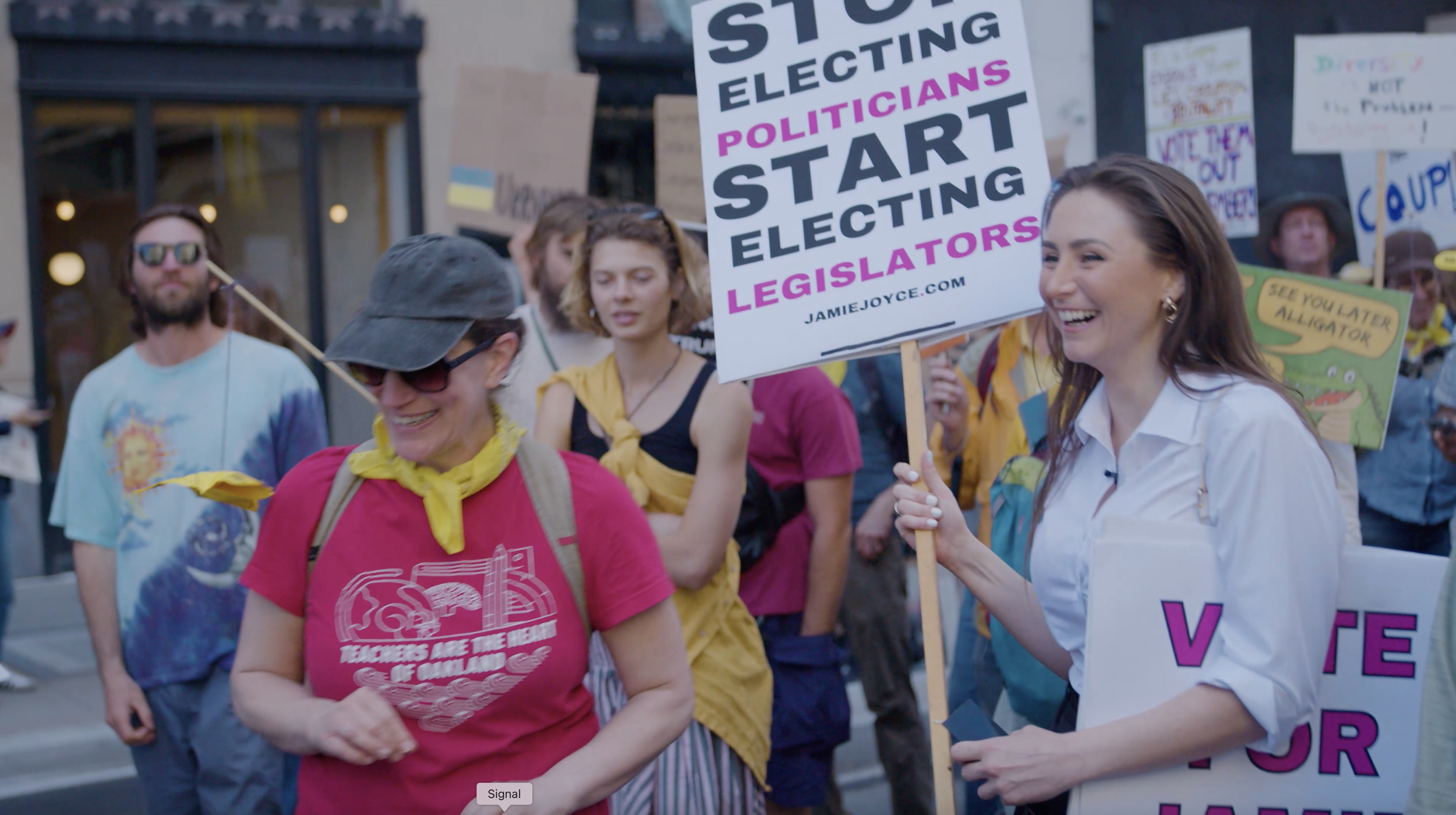
Jamie's mother grew up in a makeshift foster home run by her grandmother, being one of 27 kids under that roof. She dropped out of school at 13 to become a professional figure skater. Jamie's father was one of 8 siblings, and made his living as a traveling salesman with a genuinely genius gift for comedy.
The two of them met, had an accident, and got Jamie. They married and raised their daughter to have a strong work ethic, a great sense of humor, and to treat people like family - even if they aren’t actually related.
Although Jamie was an accident, she has lived her life very intentionally to be of service to others through a long career in charity and pro-social technology. When she moved to Oakland, and then Berkeley, she built a world-class career in which she has been invited to present to government departments, build AI tools for researchers, teach university students, and speak on stages around the world.
When Jamie thinks about the future, she doesn’t dream of being a politician until she dies. She may one day open up a foster care home for children, just like her grandmother did. But when she looks at Congress today, she is disappointed: with the legislation she’s reading, with the service representatives are offering, and with their lack of familiarity with AI and its harms and impact. Since her own representative has ignored her repeatedly, Jamie decided to step into the race to challenge the incumbent and offer District 12 voters the choice of her expertise and sterling record of service, arguing that it’s time for tech-native millennials with policy backgrounds to show up for government service before it’s too late. It’s time to vote out the establishment and elect experts who don’t take corporate PAC money.

Making a Plan to Address AI Impact
We're entering a new era, one defined by AI and technology, and Jamie's mission is simple: make sure a people-centered democracy survives the transition.
Recognition of her work in AI: Jamie has spent years in the AI field, leading projects in autonomous research, fact-checking agents, and AI-powered formal reasoning for evidence-based policy. The Future of Life Foundation named her an "AI For Human Reasoning" fellow. She was interviewed for "The AI Doc" alongside the biggest names in the field. OpenAI and xAI have both invited her in to present her work internally. Her work has been cited in a published scholarly work by Anthropic AI researchers - specifically writing on the topic of democracy. World-renowned AI ethicists, activists, movement builders, and even some top CEOs count her as a trusted confidante.
Understanding the debate about AI: Jamie has been mapping the debates about AI for years (building databases of papers, public commentary, and government policy), but she doesn't just study AI issues - she works with it every day, and she knows we both need to take action now and need to make a plan for the longterm.
What she is bringing to the table: The part of the MAD Act (which Jamie authored) that is dedicated to AI is 160+ pages of serious policy, including: immediate red-line regulations, interim safeguards, hammer provisions, and a mandate forcing the government to build a real plan for AI's impact across 19 domains (from jobs to the environment) with the process to draft evidence-based policy. AI/LLMs/ML are great tools, but we need to be sure it works for people - not against them. Jamie wants people to keep building, but do it with guardrails to prevent harms.
Why this matters: Most politicians get briefed on AI, but Jamie has worked in and around the field. She's been building with it, documenting its harms, and tracking the debate for years. If elected, she'll bring that hard-won expertise to Congress because America doesn't need another campaign promise. It needs a plan for AI that actually works.
Jamie’s Work In and Around Government/Democracy
Jamie has a passion and expertise in governance systems. Over the past decade, Jamie has worked in "civic/democracy tech," which is the global movement of technologists working to modernize government and make it more transparent, accessible, and effective. Here are some highlights:
Jamie’s Background in Building Tech for Democracy: Jamie has led technical teams through a nonprofit she founded which focuses on making sure democratic systems survive the 21st century. Her teams have been contracted by PhD researchers, non-profit organizations, think tanks (working with a U.S. senator), cities, AI companies, and members of the public to create intelligence products that inform democratic decision-making. Her work has included drafting legislation, building decision-making models for local governments, modeling civilization-scale policy debate, authoring intelligence briefs, designing AI research tools, and pioneering an entirely new method called "Scaled Democratic Reasoning” - a new form of logical reasoning at scale.
She co-launched Democracy's Library at the Internet Archive: The Internet Archive (best known for the Wayback Machine) sought Jamie out to launch a massive effort to digitize and open up U.S. local, state, and federal government documents. Jamie got to work diagnosing challenges with records management at every level of government and wrote a lengthy landscape analysis. The Superintendent of Documents of the United States flew from D.C. to California just to see her present this work. This expertise is what, in part, informs her perspective on how we can get more Epstein files.
She created a database mapping the entire U.S. government: including working with her team to document hundreds of executive branch agencies in order to understand available levers of change, government mandates, and the records they hold.
She's read hundreds of bills, written her own, and taught students from 32 universities how to logically deconstruct legislative text.
At USC Dornsife's Center for the Political Future, the director personally asked her to build an internship program teaching students the political decision-making models that she invented.
She's given dozens of talks across multiple countries on modernizing democracy for the 21st century, has written several articles, and is contributor to two books (one on the future of democracy).
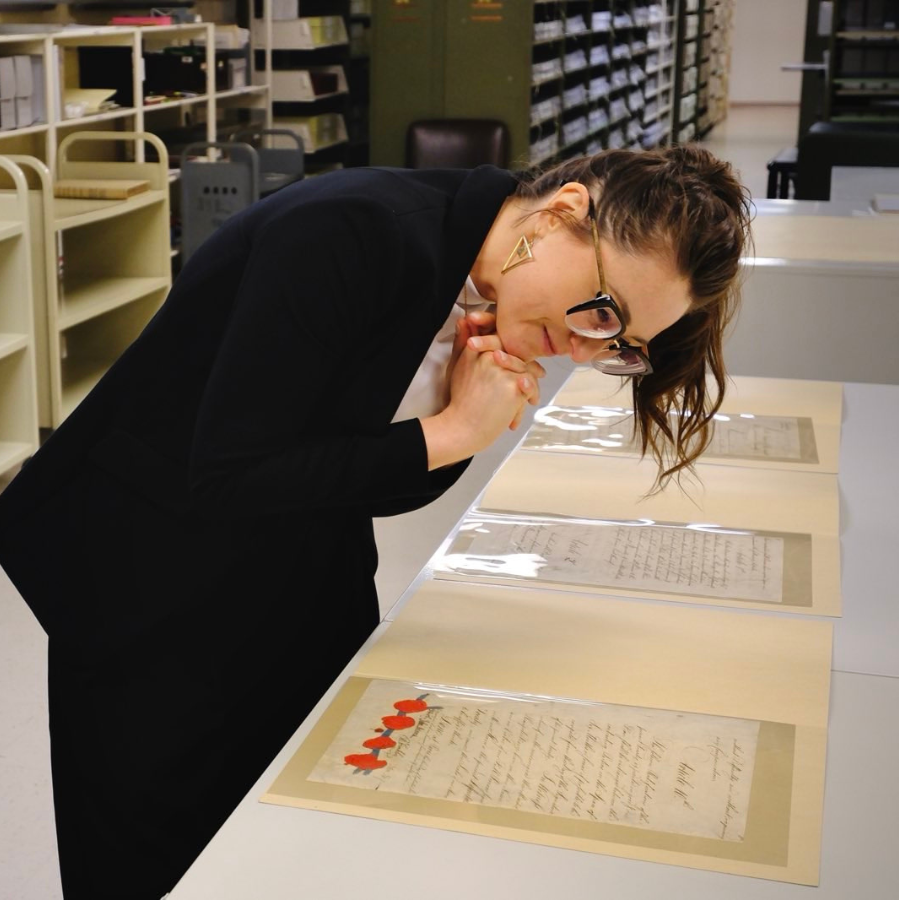
Last year she moved to D.C. for 3 months to negotiate with DOGE to protect agencies. One agency she wanted to protect was NARA, and it seems that NARA was never cut by DOGE. She was then asked to deliver an internal government briefing about the importance of digitizing declassified records. A government official at NARA wanted to thank Jamie for this advocacy with a private tour of the U.S. Treaties Vault, where she got to view, in person, the Treaty of Paris (which is the document that Benjamin Franklin signed to end the Revolutionary War). This is not the only internal government briefing Jamie has been asked to make.
The Foresight Institute (which has backed multiple future Nobel laureates) named her a Collective Intelligence fellow.
She collaborates with some of the world's most renowned democracy technologists on projects shaping the future of democratic processes.

Jamie’s Social and Community Service
International Environmental and Humanitarian Work: Before working in the “democracy field,” Jamie was COO of an international environmental and humanitarian organization, overseeing projects in over 20 countries. She also served on the board of Wikitongues, the nonprofit fighting to preserve all 7,000+ of the world's languages.
National Work: During the COVID pandemic, Jamie was the volunteer coordinator of the nation’s largest civilian PPE manufacturing effort, which won an award from the government. Jamie remains an advisor to the company which was formed from it, Hermtac, which provides satellite telehealth services to veterans.
Community Work: Today, she sits on the board of the Sand Mandala Foundation, which funds artists. From her home in Berkeley, she manages a historic building as a part-time job which she opens up as cost-free venue space for the community: silent meditation retreats, choir practice, birthday parties, community theatre, weddings, art shows, and memorials.
Her memberships have included: the Rotary Club, the Society of American Archivists, the American Library Association, the Office of Intellectual Freedom, Nation of Makers, the Freedom to Read Foundation, the Linux Foundation, and the C2PA. She's a Wikipedia editor. She's volunteered for the Human Library. She was an advisor to Atlas Computing. And she co-founded Canonical Debate Labs.
Jamie has always fought for a better world. She's not stopping anytime soon.
What Jamie Stands For & Against
Jamie isn’t just making campaign promises, she has already written legislation about the issues she campaigns on. Read more about her bill, The MAD Act, and vote for Jamie so she write more legislation as a Congresswoman and give power back to people!
✔ getting more Epstein files (via the MAD Act)
✔ deleting the surveillance state (via the MAD Act)
✔ refusing AIPAC money and pro-Israel PAC endorsement (unlike the incumbent)
✔ investigate foreign influence on campaign-adjacent organizations (via the MAD Act)
✔ reining in ICE (via the MAD Act)
✔ funding electoral reform (via the MAD Act)
✔ putting the President in check (via the MAD Act)
✔ protect our environment and invest in energy infrastructure
✔ stopping executive overreach and corruption (via the MAD Act)
✔ end the genocide in Gaza
✔ stop sending weapons to Israel
✔ end foreign influence in our elections (via the MAD Act)
✔ improved education for all, higher wages for teachers, and more resources for classrooms
✔ protect the right to work and retire with dignity
✔ affordable healthcare and housing for all
✔ develop a real plan for AI’s impact (via the MAD Act)
✔ improving social welfare and social services, including getting homeless people the support they need
✔ getting dark money out of our elections (via the MAD Act)